Kashmir’s Chrysanthemum Garden Opens for 2026: Can Bagh-e-Gul-e-Dawood Make Autumn a New Tourism Season?
By: News Desk | 23 October 2026
Srinagar’s autumn landscape has a new attraction, and the Jammu and Kashmir government hopes it will do more than add colour to the season. On Friday, October 23, Chief Minister Omar Abdullah opened the 2026 Chrysanthemum Show at Bagh-e-Gul-e-Dawood, inviting tourists and local residents to experience a floral spectacle designed to give Kashmir another reason to welcome visitors after the spring tulip season.
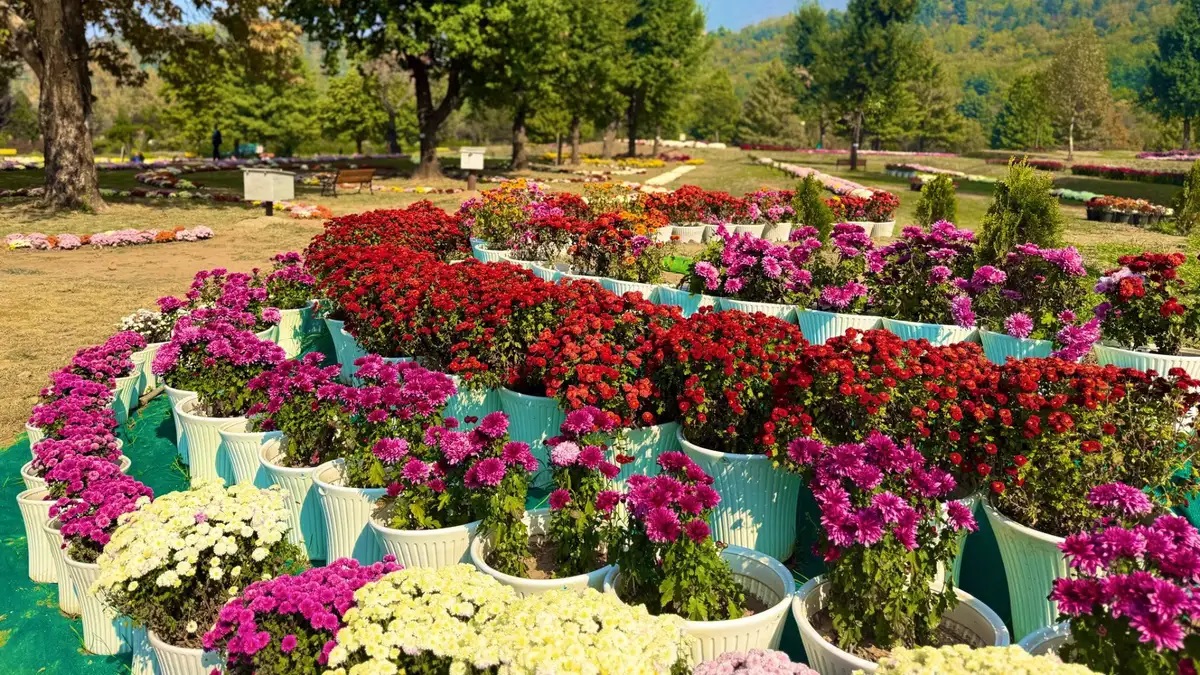
Featuring approximately 3.5 lakh chrysanthemum plants, more than 70 varieties and nearly 12 million expected blossoms, the garden has returned for its second consecutive year with expanded flower beds, landscaped displays, water features, pergolas and improved visitor facilities. The initiative reflects a broader effort to make Kashmir attractive across more months of the year, rather than concentrating tourism around its best-known spring and summer destinations.
1. Bagh-e-Gul-e-Dawood: A New Chapter in Kashmir’s Autumn Tourism
The 2026 exhibition carries the theme “Enriching Autumn with New Colours”, an appropriate description for a season when Kashmir’s chinar trees turn shades of red, copper and gold, transforming the Valley’s landscape.
According to reports published ahead of the opening and on October 23, the garden features around 350,000 chrysanthemum plants representing more than 70 varieties. Officials expect these plants to produce approximately 12 million blossoms. The expanded displays, decorative landscaping and additional visitor facilities are intended to make the experience more attractive than last year’s edition.
The garden also offers an alternative to the familiar itinerary of Dal Lake, Mughal gardens and the Valley’s mountain resorts. For those visiting Srinagar during October and November, it creates another reason to spend time in the city rather than treating it merely as a gateway to other destinations.
Also Read | Kashmir’s Autumn Gets a Floral Makeover: Explore Srinagar’s New Chrysanthemum Garden
2. Why Kashmir Wants an Autumn Attraction Like the Tulip Garden
Kashmir’s Tulip Garden has established a strong association between spring and floral tourism. Every year, its seasonal opening gives travellers a reason to plan trips around a relatively short period of flowering.
Autumn presents a different opportunity. The Valley’s changing foliage, cooler weather and harvest-season landscapes already attract visitors, photographers and nature enthusiasts. What has been missing from the tourism calendar is a large, dedicated flower exhibition capable of giving the season the same kind of recognisable identity that tulips provide in spring.
Chief Minister Omar Abdullah said the chrysanthemum garden was developed to address that gap. While the Tulip Garden draws visitors at the beginning of the tourism season, he explained, the government wanted something distinctive to offer during autumn as well.
That does not mean chrysanthemums alone can transform the tourism economy. But a well-maintained garden can become an important part of a wider itinerary, particularly when combined with heritage sites, local cuisine, handicrafts and the natural beauty for which Kashmir is known.
For a broader look at this opportunity, read Kashmir Beyond Spring: How Srinagar’s New Chrysanthemum Garden Could Transform Autumn Tourism.
3. From 3.5 Lakh Plants to 12 Million Blossoms: What the Numbers Mean
The figures announced for Bagh-e-Gul-e-Dawood are striking. Around 350,000 plants across more than 70 varieties are expected to produce nearly 12 million blossoms.
These are plant and expected-flower counts, not a measure of visitor numbers or tourism revenue. The distinction matters because the garden’s horticultural scale and its eventual economic performance are two different questions.
The exhibition brings together a range of chrysanthemum varieties, adding differences in colour, form and flower size to the landscape. Expanded flower beds, water features, pergolas, selfie points and improved visitor amenities are intended to make the site more than a collection of flowering plants.
Weather is another important factor. The department has indicated that flowering could continue until around December 5 or 6, depending on conditions. This provides a potential visiting window of roughly six weeks from the October 23 opening, although the actual display will change as the season progresses.
4. Local Floriculture Could Give the Garden an Economic Advantage
One of the more significant aspects of the project is its reliance on locally propagated plant material.
Omar Abdullah contrasted the chrysanthemum garden with the Tulip Garden, for which bulbs have to be sourced from outside the country. He said much of the material used at Bagh-e-Gul-e-Dawood is produced and multiplied locally, giving the garden a more self-reliant horticultural base.
Local propagation can build horticultural expertise, reduce dependence on imported planting material and help the department maintain a collection of plants across successive seasons. It may also create opportunities for local nurseries, growers and skilled gardeners if demand for ornamental plants expands.
However, local propagation should not automatically be equated with a lower overall cost. Labour, water, fertilisers, plant protection, infrastructure, maintenance and replacement planting all carry expenses. The available reports do not provide a detailed cost comparison between the chrysanthemum and tulip gardens.
That is an important gap. If the government intends to develop Bagh-e-Gul-e-Dawood into a permanent seasonal attraction, publishing information about operating costs, local plant production and visitor spending would help demonstrate whether the model is economically sustainable.
The potential is real, but the financial case will be stronger when supported by transparent figures rather than assumptions.
5. Can Chrysanthemum Tourism Support Srinagar’s Local Economy?
That is where the chrysanthemum project could have a wider effect.
The Jammu and Kashmir government’s Economic Survey 2024-25 describes tourism as an important contributor to the Union Territory’s economy, linking the sector with employment, infrastructure development and local handicraft and handloom industries. It estimates tourism’s contribution at almost 7% of the economy.
These totals cover the entire Union Territory and include different categories of travellers. They should not be interpreted as figures for Srinagar alone, nor as a direct measure of the market available to the chrysanthemum garden.
Still, the wider trend underlines why seasonal diversification matters. A destination that relies heavily on a few popular periods can be vulnerable when travel patterns change.
For local businesses, the key question is whether the garden brings additional visitors or simply redirects people who would already have come to Srinagar. Additional visitors who stay longer and spend locally would provide the clearest economic benefit.
To establish that impact, authorities would need to track garden footfall, visitor origins, spending patterns, local employment and the performance of nearby businesses during the exhibition period.
For readers interested in planning a seasonal visit, Kashmir’s Autumn Gets a Floral Makeover: Explore Srinagar’s New Chrysanthemum Garden offers a complementary look at the attraction and its place in an autumn itinerary.
6. A Growing Attraction, but Not Yet a Proven Tourism Success
The inauguration has generated attention, but the garden’s longer-term success cannot be measured by its opening ceremony alone.
The 2026 exhibition follows the garden’s first season in 2025, giving officials an opportunity to improve the layout, expand the flower beds and introduce new visitor facilities. Abdullah said the garden had improved considerably compared with last year and indicated that further additions would be made in future editions.
There are also a few details that deserve clarification. Published reports differ on the garden’s total area, with some describing a 100-kanal site and another report citing 120 kanals. The consistently reported figures are approximately 3.5 lakh plants and more than 70 varieties. Until the department publishes a definitive site-area figure, it would be premature to present either area estimate as settled fact.
These limitations do not diminish the garden’s appeal. They simply point to the difference between announcing a tourism initiative and demonstrating its results.
For more on how the attraction could fit into a broader seasonal travel plan, see Kashmir Beyond Spring: How Srinagar’s New Chrysanthemum Garden Could Transform Autumn Tourism and Kashmir’s Autumn Gets a Floral Makeover: Explore Srinagar’s New Chrysanthemum Garden.
7. Kashmir’s Autumn Colours Offer More Than a Floral Show
The chrysanthemum garden is arriving at a time when Kashmir’s autumn landscape already has considerable appeal.
Chinar trees changing colour, gardens preparing for winter, cooler evenings and views of the Zabarwan mountains give the season a distinct character. Unlike spring, when flowering tulips often dominate the visitor experience, autumn offers a combination of foliage, flowers, heritage and quieter outdoor exploration.
Bagh-e-Gul-e-Dawood could bring these elements together in a single itinerary. Visitors might explore the floral displays, continue to nearby gardens, spend time around Dal Lake and discover Srinagar’s traditional crafts and cuisine.
The garden’s location also gives it an advantage: it can complement existing attractions rather than requiring visitors to travel to a distant destination solely to see the flowers.
There is a cultural dimension to the initiative as well. Kashmir’s gardens are not merely decorative spaces. They form part of a long tradition of landscape design, horticulture and the relationship between built environments and the natural setting. A dedicated autumn garden adds another seasonal expression to that tradition.
If promoted thoughtfully, the attraction could encourage visitors to appreciate Kashmir beyond the familiar images of snow-covered mountains and spring tulips.
Also Read | Kashmir Beyond Spring: How Srinagar’s New Chrysanthemum Garden Could Transform Autumn Tourism
8. The Challenge: Turning Seasonal Interest into Year-Round Tourism
The government’s ambition is clear: spring should not be the only season associated with a major floral attraction in Srinagar.
But a longer tourism season requires a broader strategy. A garden can serve as an anchor, yet visitors also need reliable transport, suitable accommodation, clear travel information, clean public spaces and access to experiences beyond the main attraction.
The 2025 tourism figures illustrate the importance of this wider approach. After reaching a reported 2.36 crore visits in 2024, Jammu and Kashmir recorded approximately 1.78 crore in 2025. Government figures and subsequent reporting have linked the downturn to disruptions including the Pahalgam terror attack and other difficult developments during the year.
For the chrysanthemum garden, a sensible path forward would include:
-
Reliable seasonal information: Publish opening details, visitor guidance and updates on flowering conditions.
-
Support for local businesses: Connect the attraction with nearby restaurants, artisans, guides, transport operators and accommodation providers.
-
Transparent performance data: Record visitor numbers, maintenance costs and local economic benefits.
-
Horticultural continuity: Preserve the garden’s quality through appropriate propagation, skilled maintenance and careful planning for each season.
-
A wider autumn itinerary: Promote the garden alongside Srinagar’s heritage, lakes, gardens and traditional cultural experiences.
These measures would help turn a promising seasonal display into a lasting tourism asset.
9. What Visitors Should Know Before Planning a Trip
Srinagar, Jammu and Kashmir
The Chrysanthemum Garden is open to the public for its second seasonal exhibition, inaugurated on October 23, 2026.
Around 3.5 lakh chrysanthemum plants, more than 70 varieties and nearly 12 million expected blossoms.
Expected flowering period
Officials expect flowering to continue until around December 5 or 6, subject to weather conditions. The actual bloom may vary.
Best experience
Allow time to explore the flower beds and landscaped areas, photograph the displays and enjoy the surrounding autumn scenery.
Check before travelling
Current opening hours, entry fees, transport arrangements and any weather-related changes should be confirmed through the relevant official authorities. These details were not independently verified for this article.
Visitors should avoid assuming that the entire display will remain unchanged throughout the season. Those travelling specifically for the flowers may wish to check recent local updates before setting out.
Conclusion: Can Bagh-e-Gul-e-Dawood Become Kashmir’s Autumn Signature?
Srinagar’s Chrysanthemum Garden represents a practical attempt to give Kashmir’s autumn tourism a stronger identity. With hundreds of thousands of plants, dozens of varieties and an expected display of millions of blossoms, Bagh-e-Gul-e-Dawood has the scale to become a recognisable seasonal attraction.
Its potential goes beyond photography and sightseeing. By encouraging visitors to explore Srinagar later in the year, the garden could create additional opportunities for local businesses, showcase the capabilities of Kashmir’s floriculture sector and complement the Valley’s established tourism destinations.
Yet the real test lies ahead. The number of flowers may draw attention, but sustained visitor interest, sound maintenance, transparent economic assessment and support for local enterprises will determine whether the garden becomes a lasting success.
Kashmir does not need to replace its spring tulips to strengthen autumn tourism. It needs to build on the attractions it already has and give travellers compelling reasons to return.
If Bagh-e-Gul-e-Dawood can do that year after year, its most important contribution may not be the number of blossoms it produces, but the additional weeks of opportunity it creates for Srinagar and the people whose livelihoods depend on tourism.
Follow Us on WhatsApp
Get Breaking News, Exclusive Updates & In-Depth Analysis from Kashmir and beyond, delivered straight to your phone.
Join our WhatsApp Channel: Follow Now